Trading infrastructure stops being resilient the moment incident response depends on heroics instead of architecture
Why serious trading platforms need incident response and operational resilience designed into architecture, tooling, and governance instead of relying on ad hoc fixes and individual effort during outages.
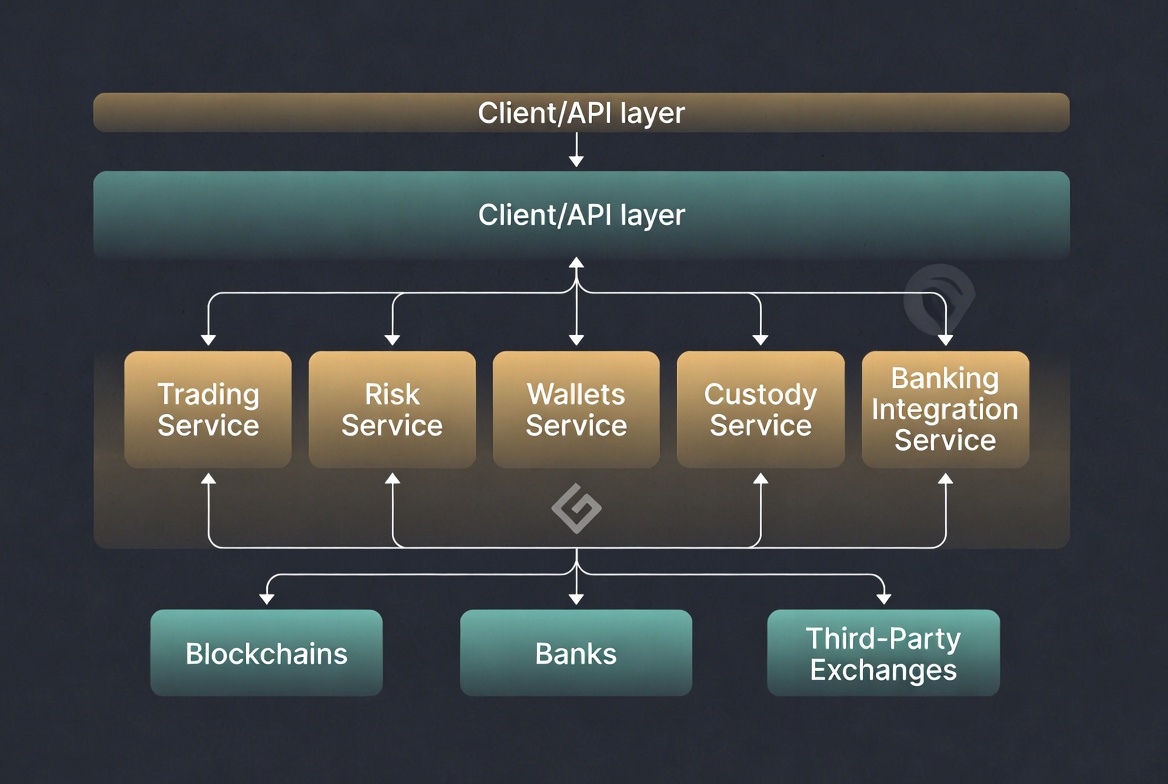
Most trading platforms discover their true architecture not from diagrams but from incidents. It is only when something breaks—market data stops, an exchange link fails, a strategy misbehaves, a deployment goes wrong, a risk engine stalls—that the system reveals how it actually behaves under pressure. In that moment, the difference between a resilient platform and a fragile one is not how clever the code is. It is whether incident response is treated as a first-class design concern or as an improvised performance.
Heroic incident response can save a bad day. It cannot compensate for an architecture that assumes operations will always be smooth. If the platform relies on individuals to remember manual procedures, reverse-engineer behavior from logs, improvise containment, or coordinate recovery without clear rails, resilience is already compromised. A trading system has to assume that incidents will happen, and then decide whether it wants to survive them through happenstance or through design.
Incident response is a system, not a meeting
Many organizations think of incident response as a meeting format: who joins, who speaks, who takes notes. That social structure matters, but it is only one part of the response system.
The real system includes detection mechanisms, runbooks, communication channels, automated containment logic, failover paths, recovery workflows, and clear links between architecture and operations. If detection is slow, if signals are noisy, if roles are undefined, if response actions depend on ad hoc experimentation, then the incident bridge is merely a place where uncertainty is amplified in real time.
A trading platform that treats incident response seriously encodes as much as possible into its tooling and design. Alerts map to specific playbooks. Known failure modes have predetermined containment steps. Roles are assigned in advance. The system can tell operators what is happening instead of asking them to infer it from scattered symptoms. Meetings still happen, but they are coordinating a structured response rather than inventing one.
Preparation is where resilience is actually built
Every incident response framework starts with preparation for a reason. Preparation is the only phase in which teams can act without the constraints of live pressure, incomplete information, and external dependencies. It is also the phase most often underinvested in until after a major event.
In trading systems, preparation means more than having a runbook. It means identifying critical components, mapping dependencies, rehearsing failover, defining what it means to operate in degraded modes, and ensuring that monitoring covers the behaviours that actually matter to the business rather than just infrastructure health. It includes load tests, chaos experiments in safe environments, and scenario rehearsals that go beyond theoretical checklists.
What matters is not whether a document exists. It is whether the platform and the people running it have already experienced controlled failure states before those failures arrive uninvited. A resilient system does not see every incident as a complete surprise. It recognizes at least some of the patterns because the organization has chosen to meet them in advance.
Detection and diagnosis should not be left to intuition
In many trading outages, the longest phase is not containment or recovery. It is figuring out what is actually happening. Logs are collected, dashboards are opened, queries are run, and everyone tries to find the story that fits the observed symptoms. In a complex platform, that search can take longer than the technical fix itself.
Architectural resilience requires designing for faster, clearer diagnosis. That means structured logging, consistent metrics, tracing across services, and a habit of instrumenting not just infrastructure but domain behaviour. It also means having views that reflect the business impact directly: which strategies are affected, which venues are unreachable, which risk controls are offline, and what the platform is currently failing to provide to its users.
When detection and diagnosis are treated as afterthoughts, incidents become longer and more damaging than they need to be. When they are first-class concerns, the time between something breaking and someone knowing exactly what broke shrinks, and the rest of the response can proceed with less guesswork.
Containment is a design question, not just a procedural one
Containment is often described procedurally: isolate, block, pause, disable, throttle. In practice, those actions are only possible if the architecture supports them.
A trading platform that has no way to pause one strategy while others continue, to disable one venue path without redeploying the entire system, or to block a single class of orders without intrusive code changes is already constrained before the incident begins. In that environment, containment becomes coarse and risky. Teams are forced to choose between shutting everything down or letting a faulty component continue to operate because the system offers no narrower lever.
Building for containment means designing the platform with isolation boundaries in mind. Strategies, markets, venues, and services should be separable enough that they can be slowed, paused, or rerouted with limited side effects. Risk controls and kill switches should be attached to the parts of the system where they can act with precision. When these options exist in the architecture, containment stops being a theoretical promise and becomes a practical tool.
Recovery paths should be practiced, not invented live
Recovery is where many organizations assume they will simply rebuild from backups, restart services, or roll back deployments. That assumption is comfortable and often wrong. Recovery paths that have never been exercised tend to fail at the exact moment they are needed most.
In trading infrastructure, recovery is rarely a single operation. It may involve resynchronizing market data, rebuilding in-memory state, reconciling positions, verifying that risk engines see consistent portfolios, reattaching sessions to venues, and restoring confidence that the system’s understanding of reality matches the outside world. Each of those steps can fail in ways that are hard to diagnose under time pressure.
Resilient architectures therefore treat recovery as something to test, automate, and refine. They include clear procedures for rebuilding critical state, verifying consistency, and reintroducing traffic gradually instead of flipping everything from off to on in one motion. When recovery is a familiar path, incidents end sooner and with fewer surprises. When it is a theory, the incident ends only after enough trial and error happens to approximate a plan.
Post-incident reviews are part of architecture, not just culture
Postmortems are often described as a cultural practice: blameless, transparent, focused on learning rather than punishment. That framing is important, but it can obscure another dimension: post-incident reviews are also an architectural practice.
Each incident reveals gaps not only in behaviour but in design: missing isolation boundaries, weak observability, misunderstood dependencies, brittle deployment practices, overloaded components, and unclear risk ownership. If those findings remain in documents without feeding back into the architecture roadmap, the platform will repeat patterns under slightly different forms until something more serious breaks.
Treating post-incident learning as an architectural input means making deliberate structural changes in response. It may lead to new service boundaries, additional metrics, altered failover logic, stronger configuration management, or revised risk controls. It may also lead to simplification: removing features that contribute more fragility than value. In that sense, incident reviews are not just about improving process. They are about evolving the system itself.
Operational resilience is not only about redundancy
A common instinct is to associate resilience with redundancy: more servers, more regions, more backups, more copies of everything. Redundancy has its place, but it is not enough by itself, and in some cases, it can even hide deeper weaknesses by making failures slightly less frequent but no more understandable.
True operational resilience in trading platforms is about understanding and controlling failure modes. It includes redundancy, but it also includes dependency mapping, single-point-of-failure elimination, graceful degradation paths, clear priority decisions, and the ability to continue some level of service even during partial outages. It distinguishes between components that must be always-on and components that can be taken offline without catastrophic impact.
This is particularly important in markets where regulators increasingly expect venues and trading systems to demonstrate operational resilience, not just performance. The ability to explain how the system will behave under stress—and how it has been tested—is becoming part of the basic expectation for serious infrastructure.
Heroics are a sign of architectural debt
It is tempting to celebrate the people who save the system during an incident. Their effort matters, and they deserve recognition. But from an architectural perspective, repeated heroics are a smell, not a goal. They indicate that too much of the platform’s safety depends on individuals doing exceptional work under duress.
Modern trading infrastructure should aim for a different pattern. The goal is a system in which most incidents can be handled through known steps, supported by clear tooling, within an architecture that limits how much damage any one failure can cause. Heroics may still be needed occasionally, but they should be rare. When they become routine, the platform is announcing that its resilience strategy is unfinished.
In that sense, incident response in trading is less about having the right war room rituals and more about building a system that makes those rituals less necessary over time. Architecture decides whether the next outage is an unexpected crisis or a rehearsed scenario.
If you need help designing or hardening incident response and operational resilience for trading infrastructure (detection, runbooks, containment paths, recovery workflows, or post-incident architecture), you can request a high-performance infrastructure engagement through the Services page or reach out directly via the Contact terminal.