Why Rust codebases age differently from more permissive systems languages
Why Rust codebases often evolve with clearer boundaries, stricter ownership, and less hidden fragility than codebases built in more permissive systems languages.
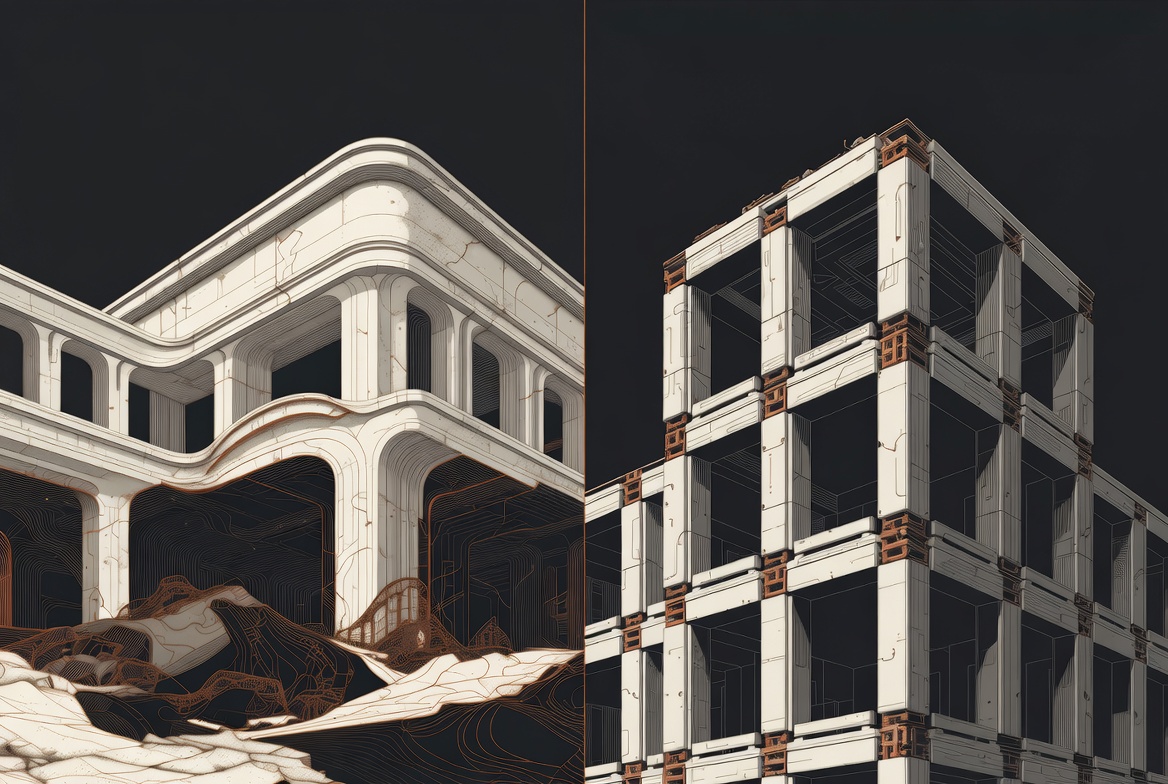
A lot of software feels healthy when it is young. The real test comes later: after features accumulate, contributors change, deadlines compress, and the original mental model starts to fade. This is where languages begin to shape how codebases age. Rust matters here because it tends to produce systems that age differently from codebases built in more permissive systems languages.
The key difference is not that Rust prevents all decay. No language does. The difference is that Rust makes certain kinds of hidden fragility harder to accumulate quietly. Ownership stays visible, invalid states are harder to normalize, unsafe regions can be isolated, and interfaces often carry more of the system’s real constraints. Over time, that changes how entropy enters the codebase.
Permissive languages often defer structural costs
In more permissive systems languages, teams can move quickly by relying on convention, discipline, and local expertise to keep complexity under control. That works for a while. But as the codebase grows, many of those assumptions stop living in code and start living in people’s heads.
This is where aging becomes dangerous. Shared mutable state spreads. Lifecycle assumptions become informal. Resource ownership gets harder to track. Low-level risk remains possible in places that look ordinary. The code may still work, but its real safety increasingly depends on institutional memory and careful human interpretation.
Rust keeps more of the design visible
Rust changes that by forcing many structural decisions into the code itself. Ownership is explicit. Borrowing rules constrain how data moves. Mutation boundaries are narrower. Types can encode more of what is valid and what is not. Unsafe code is marked instead of blended into ordinary paths.
This does not make a Rust codebase automatically simple. But it often makes the complexity more honest. The system reveals more of its real constraints in its interfaces and implementation. That visibility helps future maintainers because they do not have to reconstruct as much hidden intent from scattered conventions and old habits.
Maintenance benefits from narrower trust assumptions
One of the hardest parts of long-term maintenance is figuring out what can still be trusted after years of change. Can this component safely mutate shared state? Is this pointer lifetime still sound? Does this abstraction actually preserve the invariants it claims to preserve? In permissive languages, answering those questions often requires deep contextual knowledge.
Rust reduces that burden by enforcing stronger default guarantees and clearer boundaries. Not every maintenance problem disappears, but more of the system’s assumptions are mechanically checked instead of culturally assumed. That changes the maintenance experience from “be careful everywhere” to “be especially careful in the explicitly risky places.”
Refactoring behaves differently too
Refactoring in aging systems is where hidden fragility often becomes visible. Code that seemed stable can break in surprising ways because its correctness depended on undocumented relationships and accidental discipline. This is one reason older systems sometimes become feared rather than improved.
Rust often changes that dynamic. Because more invariants are encoded into types, ownership, and compiler-checked relationships, larger refactors can be approached with more confidence. The compiler becomes a partner in surfacing what the refactor violates. That does not make change effortless, but it makes the failure surface more legible, which is a major advantage in long-lived systems.
Explicitness slows certain kinds of decay
Aging codebases often decay through shortcuts that feel harmless in the moment: a convenience clone here, an unclear abstraction there, a function that quietly takes on too much responsibility, an unsafe assumption nobody revisits. Over time, these small compromises create systems that are difficult to reason about globally.
Rust’s friction can slow that process. Because ownership, borrowing, and type constraints resist vague design, shortcuts often become painful earlier. That can be frustrating in the short term, but it tends to preserve a healthier long-term shape. The language keeps asking whether the code still matches the real structure of the system.
Rust does not eliminate long-term problems
It is important not to romanticize this. Rust codebases can absolutely become messy. Teams can over-engineer types, misuse abstractions, create confusing async flows, or bury clarity under excessive generic design. Long-term maintainability still depends on good engineering judgment, naming, documentation, and architecture.
But even with those limits, Rust changes the default failure mode. Instead of silently tolerating more structural ambiguity, it pressures teams to keep important constraints explicit. That means aging happens under more resistance, which is often enough to preserve quality longer.
Why this matters
Serious software is rarely judged only by how fast it launches. It is judged by how well it survives growth, turnover, refactoring, and operational pressure over years. That is where Rust becomes especially interesting. It helps codebases retain more of their original discipline as they evolve.
That is why Rust codebases often age differently from more permissive systems languages. They do not escape complexity, but they tend to carry it in a more visible, constrained, and reviewable form. For teams building long-lived infrastructure, that difference becomes strategic over time.
If you need help hardening the off-chain side of your crypto project (wallets, backend, domains, or incident response), you can request a security-focused engagement through the Services page or reach out directly via the Contact terminal.