Why explicit danger is better than invisible danger in Rust
Why Rust’s explicit unsafe model is often better than languages where dangerous behavior stays mixed into ordinary code.
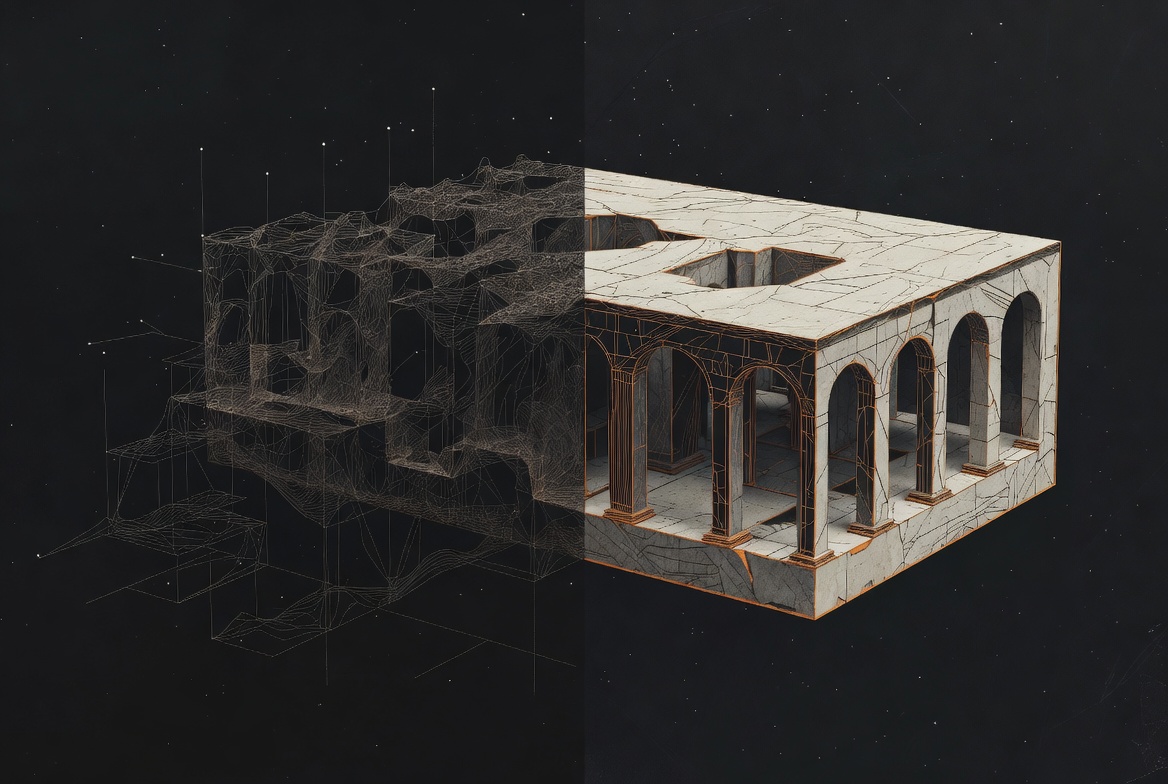
One of the most misunderstood parts of Rust is the word unsafe. At first glance, it sounds like a flaw in the language: if Rust is supposed to be safe, why does it even have an unsafe escape hatch? The better way to understand it is this: Rust does not pretend danger can be eliminated from systems programming. It makes danger explicit.
That is a major improvement over languages and ecosystems where dangerous behavior is mixed into ordinary code and left to discipline, convention, or careful review to contain. In Rust, unsafe code marks a trust boundary. It tells the team and the compiler that a particular piece of logic depends on guarantees the compiler cannot fully prove on its own.
Safe Rust and unsafe Rust are not the same thing
In safe Rust, the compiler enforces strong guarantees about memory safety and many forms of thread safety. In unsafe Rust, some of those guarantees must be upheld manually by the programmer. According to the Rust Book chapter on Unsafe Rust, the unsafe keyword does not turn off the borrow checker or disable safety checks—it simply unlocks specific capabilities that require manual verification. That does not mean everything inside an unsafe block is automatically broken or reckless. It means the burden of proof changes.
This distinction is important because it keeps the language honest. Systems programming sometimes requires raw pointers, foreign-function interfaces, low-level memory manipulation, hardware access, or optimizations the compiler cannot verify automatically. Rust allows those operations, but it refuses to hide the moment where responsibility moves from the compiler to the engineer.
Invisible danger is harder to manage
The biggest problem with invisible danger is not that it exists. It is that teams stop being able to see where trust is actually concentrated. When dangerous operations are scattered through ordinary code with no sharp marker, risk becomes harder to audit, harder to review, and easier to normalize.
Rust improves that situation by making unsafe usage explicit. The language does not allow the most dangerous operations to blend seamlessly into the rest of the codebase. As a result, reviews can focus attention on the places where invariants matter most. Testing and documentation can become more targeted. Trust stops being ambient and starts becoming local.
Unsafe is really about invariants
A useful way to think about unsafe Rust is that it exists wherever the programmer must manually uphold an invariant the compiler cannot guarantee. That might involve pointer validity, aliasing guarantees, buffer bounds, FFI contracts, or assumptions about layout and initialization.
As detailed in The Rustonomicon, managing safety contracts manually requires deep care to avoid undefined behavior. This is why good unsafe Rust is usually small, narrow, and wrapped behind safer abstractions. The goal is not to spread manual trust everywhere. The goal is to isolate it. Once the unsafe code establishes and protects the necessary invariants, the rest of the program can often interact through a safe interface that does not expose the same risks to every caller.
Explicit danger improves review quality
In many systems languages, low-level danger is distributed across the codebase in a way that depends heavily on developer discipline and institutional memory. That creates a subtle review problem: everything looks ordinary, so reviewers must carry an enormous mental burden to detect what is truly risky.
Rust improves review quality because unsafe regions are visible by design. They tell the reader, “extra care is required here.” That does not automatically make the code correct, but it sharply improves the signal. Teams can demand stronger comments, better safety notes, smaller scopes, and clearer justifications around those blocks. In mature codebases, that visibility becomes part of the engineering culture.
Explicit unsafety makes abstraction more trustworthy
One of Rust’s strongest patterns is building small unsafe internals under a safe public API. This allows library and infrastructure authors to take on the complexity once, document the invariants carefully, and expose a simpler surface to the rest of the system.
That model matters because most software should not be reasoning about raw danger all the time. Good abstractions absorb complexity. Rust’s unsafe model supports that by making it clear where the abstraction boundary is and which layer is responsible for maintaining soundness. Instead of pretending all code is equally safe, the language allows safety to be built deliberately on top of explicit risk.
Unsafe still demands respect
None of this means unsafe Rust is harmless. It is powerful precisely because it can bypass protections the compiler would otherwise enforce. Used carelessly, it can introduce undefined behavior, memory bugs, or deep unsoundness. The point is not that unsafe is safe by magic. The point is that it is visible, scoped, and conceptually separated from the default path.
That visibility changes team behavior. It encourages minimization, auditability, and stronger documentation. It also creates a healthier engineering norm: if danger must exist, it should at least be obvious where it lives and what assumptions keep it under control.
The better model of trust
The real advantage of Rust here is cultural as much as technical. It does not ask teams to trust low-level code just because it compiled and looked ordinary. It asks them to mark the places where trust becomes manual and to justify those places explicitly.
That is why explicit danger is better than invisible danger in Rust. It does not eliminate risk, but it gives engineers a far better chance of isolating, reviewing, and containing it. In serious systems, that is not a small improvement. It is one of the reasons Rust changes how trustworthy low-level software can feel.
Knowledge Base / FAQ
Frequently Asked Questions
What does the unsafe keyword actually unlock in Rust?
The unsafe keyword unlocks specific operations that the compiler cannot verify for memory safety: dereferencing raw pointers, calling unsafe functions or FFI routines, implementing unsafe traits, mutating static state, and accessing union fields.
Does an unsafe block disable the Rust borrow checker?
No. Using unsafe does not disable the borrow checker, type checking, or lifetime rules. References used inside unsafe blocks are still verified by the compiler; it only permits operations requiring manual contract verification.
Why is wrapping unsafe code inside safe abstractions an industry best practice?
Safe abstractions contain manual safety contracts within narrow, highly audited boundaries. This prevents unsafe invariants from leaking across application interfaces, ensuring external callers cannot trigger Undefined Behavior (UB) through safe APIs.
How does explicit unsafety accelerate security audits in systems engineering?
Because memory unsafety bugs can only originate within explicit unsafe blocks, security auditors and static analysis tools can focus their deepest scrutiny directly on those designated regions rather than scanning the entire codebase.
Can Zanvexis help audit and write sound unsafe Rust abstractions?
Yes. Zanvexis specializes in auditing low-level Rust programs, evaluating FFI boundaries, verifying soundness in unsafe blocks, and engineering safe abstractions for high-performance Web3 and systems infrastructure.
If you need help hardening the off-chain side of your crypto project (wallets, backend, domains, or incident response), you can request a security-focused engagement through the Services page or reach out directly via the Contact terminal.
Need help building secure technology?
Explore how Zanvexis helps teams build secure software, blockchain systems, intelligent platforms, and high-performance infrastructure.
Explore all services →Continue reading
Related articles
Trading infrastructure stops being resilient the moment incident response depends on heroics instead of architecture
Why serious trading platforms need incident response and operational resilience designed into architecture, tooling, and governance instead of relying on ad hoc fixes and individual effort during outages.
Crypto custody stops being security and becomes counterparty exposure when architecture depends on people behaving well
Why institutional-grade crypto custody has to enforce separation of duties, destination controls, cryptographic dual control, and operating model discipline in architecture instead of trusting operator conduct.
Trading bots become brittle when architecture pretends every market is the same
Why serious trading bot infrastructure needs clear separation between exchange adapters, strategy logic, execution paths, risk controls, and observability instead of one-size-fits-all bots.