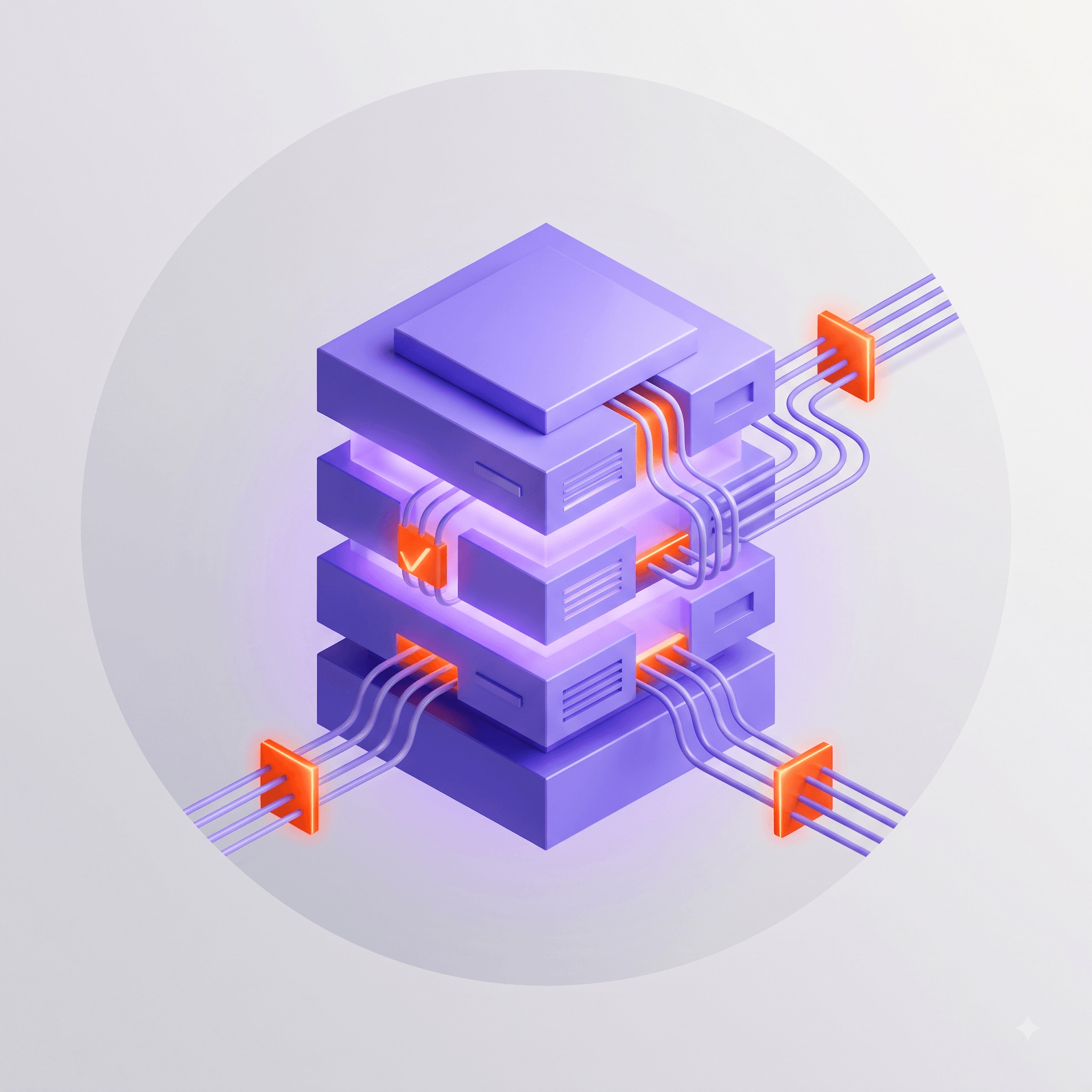
Backend & CI/CD Hardening
We engineer zero-trust backend architectures, high-throughput memory-safe microservices in Rust and Go, and cryptographically attested CI/CD pipelines to eliminate unauthorized state mutations, supply chain injections, and secret exfiltration.
Core Capabilities

Zero-Trust API Gateways & Ingestion Layers
- ■Strict mTLS termination and hardware-backed JWT/Paseto cryptographic verification
- ■Deterministic input sanitization with runtime OpenAPI and JSON Schema validation
- ■Kernel-level DDoS mitigation, token-bucket rate limiting, and anomalous IP isolation
- ■Protobuf and gRPC enforcement for high-throughput, type-safe internal communication

Memory-Safe Microservice Architecture
- ■Backend services developed strictly in Rust and Go to prevent buffer overflow vulnerabilities
- ■Asynchronous runtime isolation using Tokio and dedicated thread-pool sandboxes
- ■Strict concurrency guarantees eliminating race conditions and deadlocks in state machines
- ■Hardened containerization leveraging gVisor and distroless minimal base images
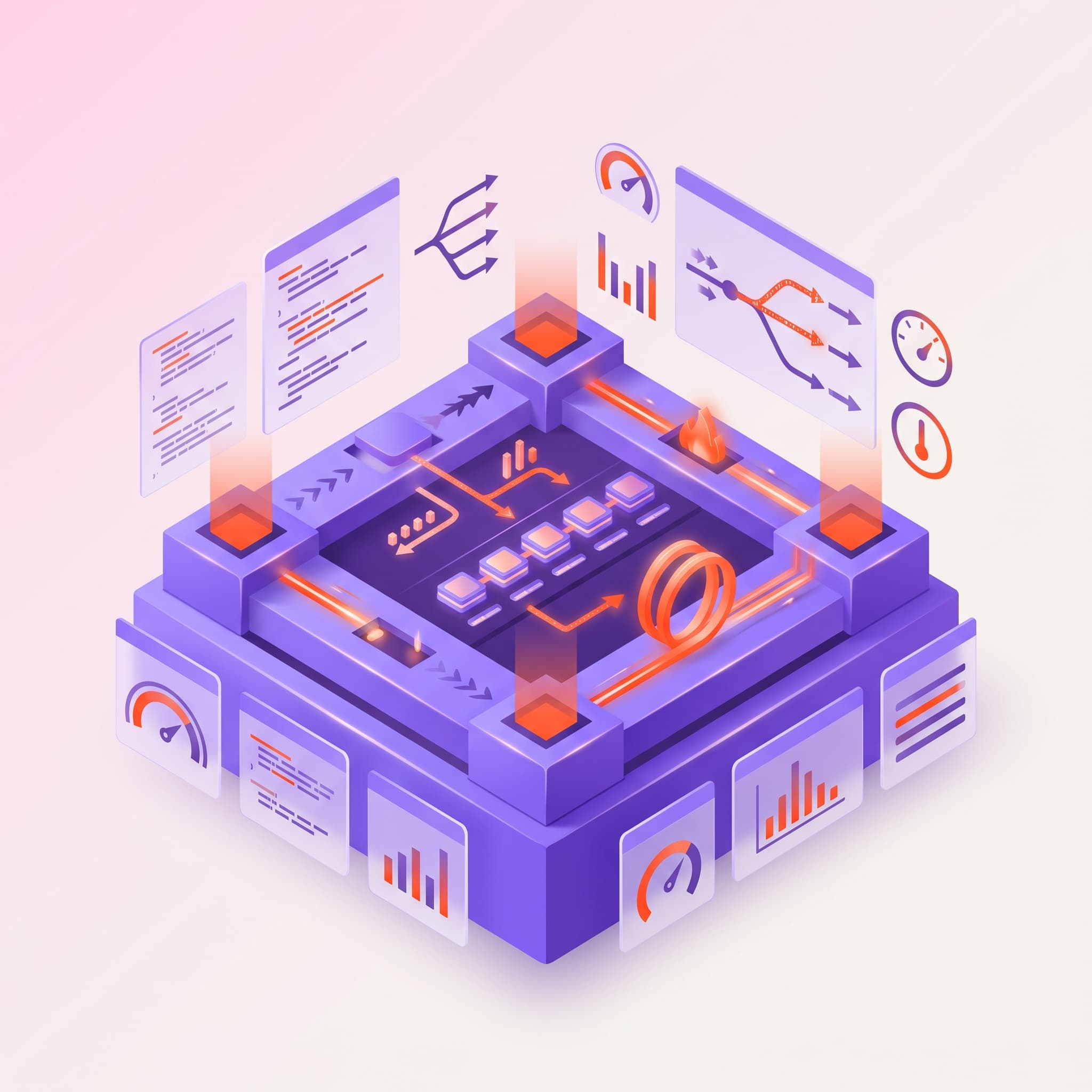
HSM, MPC & Dynamic Secret Management
- ■Hardware Security Module (HSM) and AWS KMS/Vault enclave integration
- ■Short-lived dynamic credentials with automated rotation policies under 60 seconds
- ■Strict isolation of private keys and signing operations within secure enclaves
- ■Zero plaintext secrets across disk, environment variables, and telemetry logs

Cryptographically Attested CI/CD Pipelines
- ■SLSA Level 3+ compliance with deterministic binary compilation
- ■Sigstore and Cosign signing for container images, Helm charts, and build artifacts
- ■Automated Software Bill of Materials (SBOM) generation and continuous CVE auditing
- ■Strict branch protection, ephemeral runner sandboxes, and multi-party merge gating

Database Isolation & Cryptographic Integrity
- ■Row-Level Security (RLS) and strict cryptographic access separation in PostgreSQL
- ■Application-layer field encryption (AES-256-GCM) prior to persistence
- ■Immutable write-ahead audit trails anchored to append-only storage
- ■Automated data masking and sanitization pipelines for replica environments
How It Works
Threat Modeling & Attack Surface Audit
We dissect network topographies, trust boundaries, ingress controllers, and IAM roles to map out lateral movement paths and privilege escalation vectors.
Zero-Trust Perimeter & Gateway Enforcement
We configure mTLS, rate-limiting policies, WAF rules, and cryptographic payload validation layers to isolate the internal network from untrusted traffic.
Runtime Hardening & Sandboxing
Microservices are refactored into memory-safe runtimes with strict seccomp profiles, capability dropping, and micro-segmentation policies.
Pipeline Attestation & Supply Chain Security
We lock down deployment pipelines with ephemeral runners, automated dependency scanning, cryptographic artifact signing, and zero-trust deploy gates.
Live Telemetry & Invariant Monitoring
We deploy low-overhead kernel and application probes to continuously monitor process execution, socket bindings, and anomalous memory spikes.
Target Scenarios
High-Throughput Financial & Trading Engines
Low-latency order routing, matching engines, and clearing backends with sub-millisecond execution and strict isolation against front-running and state tampering.
High-Security Web3 Indexers & Relayers
Hardened off-chain transaction submission pipelines, private RPC nodes, and validator infrastructure with zero private-key exposure.
Industrial IIoT & Telemetry Gateways
Edge ingestion brokers processing thousands of concurrent sensor streams via MQTT and Modbus with continuous cryptographic message validation.
Mission-Critical SaaS & Multi-Tenant Platforms
Enterprise cloud platforms with strict tenant boundary enforcement, automated cryptographic encryption, and zero lateral data access.
Regulated Health & Identity Systems
Decentralized identity verifiers and health data backends meeting stringent ISO/IEC 27001, SOC2, and zero-knowledge privacy requirements.
Tech Stack
Case Studies
Zero-Trust Gateway for Financial Clearing House
Architected an end-to-end memory-safe Rust API gateway processing over 45,000 requests per second. Integrated mTLS authentication, hardware-backed token verification, and automated rate-limiting to eliminate unauthorized transaction injections.
SLSA Level 3 CI/CD Attestation for Web3 Infrastructure
Hardened the release engineering pipeline for a high-frequency trading bot network. Implemented Cosign artifact verification, ephemeral isolated build runners, and automated dependency SBOM scanning to block supply chain attacks.
What Our Clients Say
"Zanvexis rebuilt our entire API gateway in Rust with hardware-level secret management. We achieved sub-millisecond response times while eliminating an entire class of vulnerability vectors."
"Their CI/CD hardening and automated binary signing gave our institutional clients verified mathematical proof of software integrity before every production deployment."
Frequently Asked Questions
Why does Zanvexis mandate memory-safe languages like Rust for backend systems?
Memory corruption vulnerabilities (such as buffer overflows, use-after-free, and race conditions) represent over 70% of critical security exploits in low-level backends. Writing core microservices in Rust guarantees memory safety at compile time without garbage collection latency spikes.
How do you secure secrets within CI/CD pipelines?
We eliminate static long-lived credentials. All pipeline jobs authenticate via OpenID Connect (OIDC) to ephemeral identity providers (like HashiCorp Vault or AWS KMS), requesting short-lived, single-use tokens that expire immediately upon job completion.
What is SLSA compliance and why does it matter for enterprise software?
Supply-chain Levels for Software Artifacts (SLSA) is a security framework that prevents tampering during build and release processes. We implement SLSA Level 3+ standards, ensuring that every deployment artifact is generated on isolated runners with cryptographic provenance.
How does the zero-trust gateway handle sudden traffic spikes during a DDoS attack?
Our gateway employs eBPF and kernel-level packet inspection combined with Envoy proxy modules to drop unauthorized payloads before they consume user-space memory, maintaining line-rate processing even under adversarial load.
Related Content
Crypto backend security fails when teams defend the contract but trust the platform
Why crypto platform security depends on hardening backend services, cloud access, CI/CD, internal APIs, signer workflows, and operational boundaries rather than focusing on smart contracts alone.
The API edge is the contract: designing a Go API layer for serious crypto platforms
Why the API layer of a Go-based crypto or fintech platform is more than just routing requests, and how to treat it as the formal contract of your system.
Why Rust fits financial and security-critical infrastructure
Why Rust is increasingly attractive for financial systems, crypto infrastructure, and software where performance, safety, and concurrency all matter at once.
Related Services
 SERVICE // 01
Frontend & Domain Protection
Defending Web3 interfaces, DNS records, and client-side execution against supply chain attacks and DNS hijacking.
 SERVICE // 02
Monitoring & Incident Response
24/7 telemetry monitoring, automated circuit breakers, and rapid containment protocols for live exploits.
 SERVICE // 03
Smart Contract & Full-Stack Security
Comprehensive smart contract audits and formal verification across Solana and EVM protocols.